cd

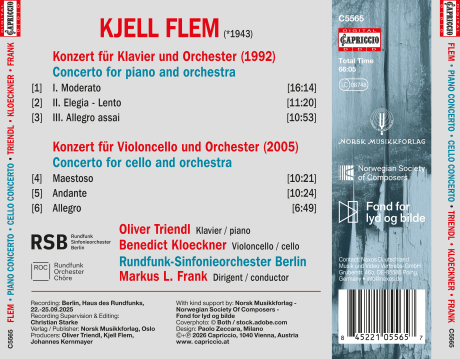
KJELL FLEM
Oliver Triendl, piano · Benedict Kloeckner, cello · Rundfunk-Sinfonieorchester Berlin · Markus L. Frank
Hörprobe
Weitere Bilder
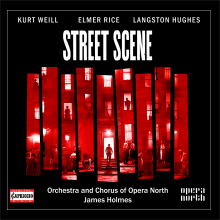
Kurt Weill: Street Scene
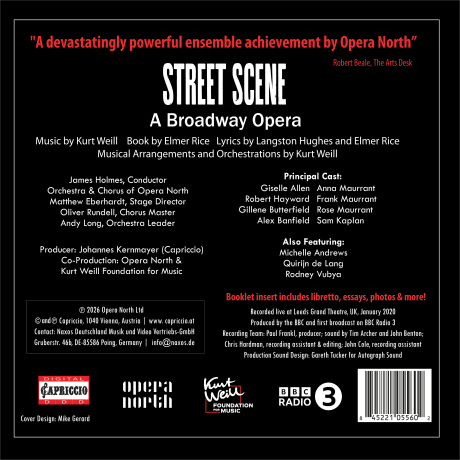
Giselle Allen · Robert Hayward · Chorus and Orchestra of Opera North · James Holmes
Today Street Scene is Kurt Weill’s most frequently revived American stage work.
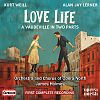
A polystylistic blending of operatic arias and ensembles, musical comedy songs and dances, dramatic dialogue both unaccompanied and underscored, and extraordinary emotional drama, Street Scene is arguably Weill’s breakthrough. Though Elmer Rice’s play was set in the 1920s, the popular music references are pure 1940s style (Glenn Miller, Rodgers and Hammerstein). After the successful release of "Love Life" (Capriccio C5550) this recording fills up the meanwhile large Kurt-Weill-Catalogue of Capriccio, again with a powerful cast from Opera North.
Hörprobe
Weitere Bilder
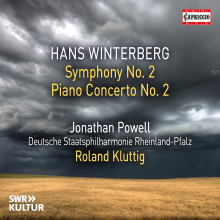
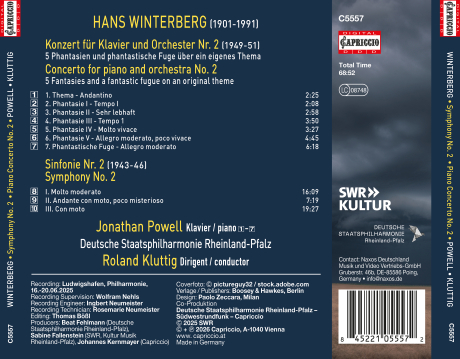
HANS WINTERBERG
Jonathan Powell, piano · Deutsche Staatsphilharmonie Rheinland-Pfalz · Roland Kluttig
Hörprobe
Weitere Bilder
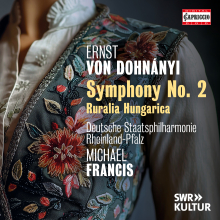
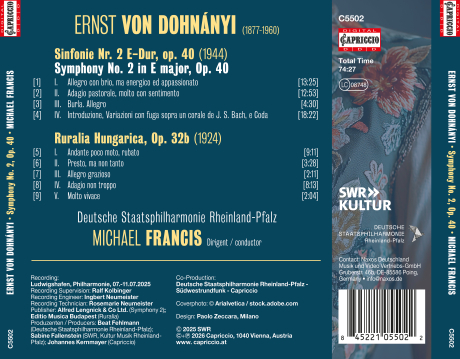
ERNST VON DOHNÁNYI
Deutsche Staatsphilharmonie Rheinland-Pfalz · Michael Francis
Ernst von Dohnanyi was one of the most versatile and influential musicians of his time but his works are now seldom played. A gap which Capriccio want to fill now with this already eight recording of his late romantical, sensual music, deeply rooted in the Austro-German classical tradition. His Symphony No. 2 is a colossal work, lasting around an hour and calling for an extraordinarily large orchestra. The composition coincided with his departure from war-torn Hungary during World War II. Ruralia Hungarica, written in 1923 and arranged for orchestra in the following year, makes use of familiar Hungarian folk-melodies, some of them known abroad through their appearance in the work of other Hungarian composers.
Hörprobe
Weitere Bilder

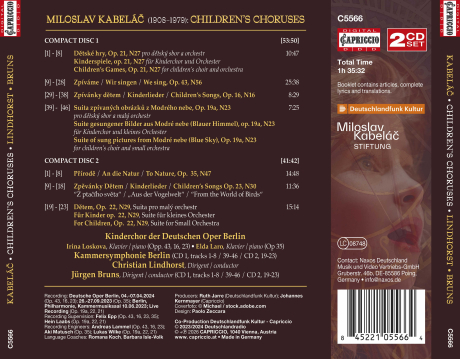
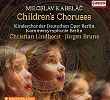
MILOSLAV KABELÁČ
Kinderchor der Deutschen Oper Berlin · Kammersymphonie Berlin · Christian Lindhorst · Jürgen Bruns
Music for children plays an important role in Miloslav Kabeláč's artistic oeuvre. Especially in the early days after the communist coup in 1948, the composer devoted himself to this genre: “I regard composing for children as a ‘touchstone’ not only for all creative abilities, but also for the human qualities of the composer. That is why I take this work as seriously and as importantly as any other". In his music, Kabeláč creates powerful atmospheric images with a playful sensitivity for language, some of which is highly onomatopoeic. His serious engagement with children's works is once again evident in the fact that Kabeláč repeatedly quoted motifs and melodies from children's works in larger symphonic works.
Sung in Original Czech Language · Booklet contains articles, complete Lyrics and translations